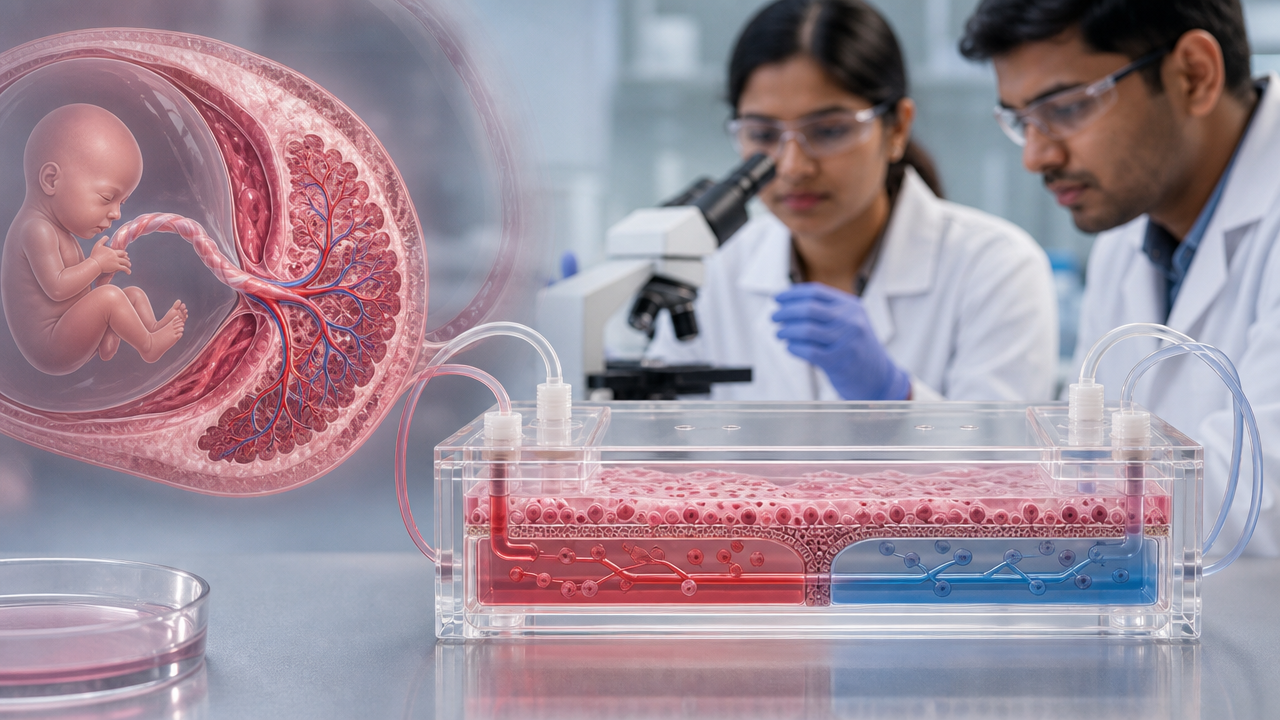
A lab-grown placenta-on-chip technology that replicates important placental functions has been created by Indian researchers in Mumbai. The gadget is associated with drug testing, pregnancy research, and a decrease in the use of animal models in medical research.
Placenta-on-chip: fundamental idea
A microfluidic device called the placenta-on-chip replicates the human placenta in a lab environment. The placenta is an organ that eliminates waste from the fetus’s blood and delivers nutrients and oxygen from the mother to the fetus.
Research organizations and partners
IIT Bombay and the National Institute for Research in Reproductive and Child Health (NIRRCH) of the Indian Council of Medical Research, located in Parel, Mumbai, are involved in the project. Professors Debjani Paul from the School of Biosciences and Bioengineering, Abhijit Majumder from the Department of Chemical Engineering, and Deepak Modi from NIRRCH are involved in the study.
Technical attributes and uses
Photolithography and soft lithography, two common microengineering fabrication techniques, were used to construct the devices. As a gatekeeper that regulates nutrient delivery and prevents dangerous chemicals, the platform is intended to resemble the placenta. Additionally, the models will be used to test medications for the pharmaceutical sector and research pregnancy-related disorders like gestational diabetes and preeclampsia.
Crucial Information for Tests
- In mammals, including humans, the placenta is a transient organ that grows during pregnancy.
- Pregnancy-related problems and elevated blood pressure are linked to preeclampsia.
- One type of diabetes that is initially identified during pregnancy is called gestational diabetes.
- Human organ functions are simulated in lab settings using microfluidic organ-on-a-chip technologies.
Support for research and patents
The placenta-on-chip technology is currently undergoing patent application. IMPRINT II C of the Science, Engineering, and Research Board, or SERB, provided funding for the research.